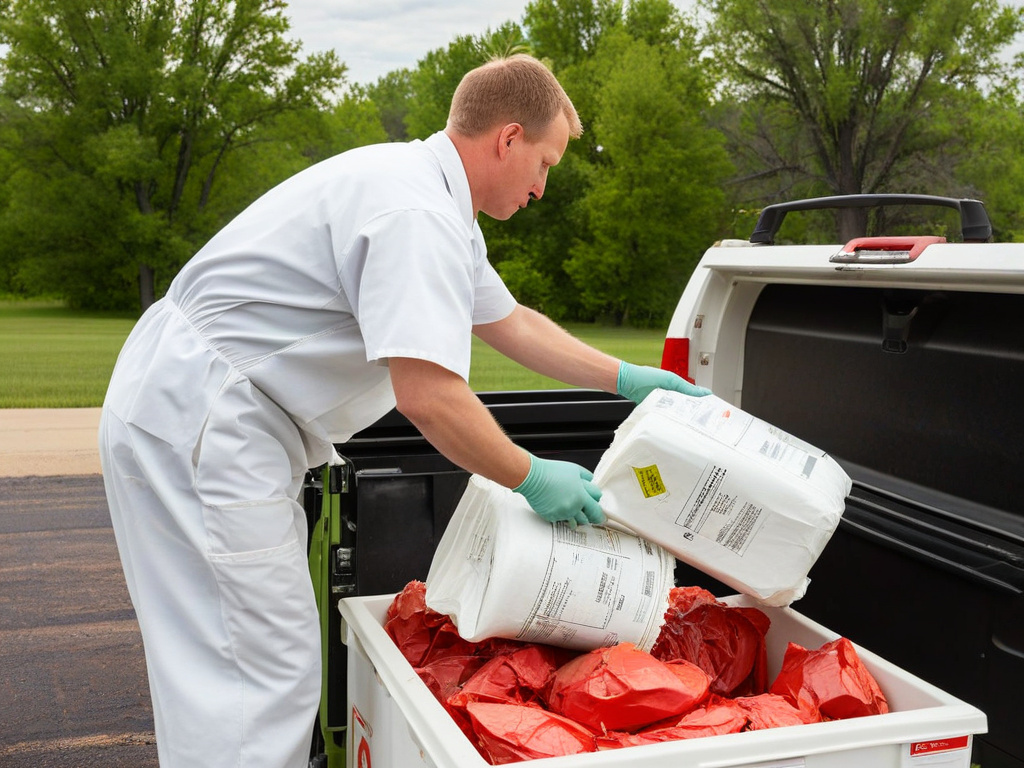
Medical waste in Yankton homes often comes from home health care in older housing stock around Hilltop and Downtown, where narrow stairwells and limited access points slow removal. Hot summers accelerate odor and bacterial growth in stored sharps containers or soiled dressings left near Gavins Point Dam properties, requiring sealed transport before temperatures climb. Regulations from state health codes dictate separate handling for chemotherapy waste versus routine bandages, and crews must track every item to avoid fines during transfers to disposal sites near Sioux Falls.
Edge cases appear when residents near the Yankton County Historical Society mix prescription bottles with household trash after a death, creating cross-contamination risks that standard haulers refuse. Soil conditions in the area, with its clay-heavy base, mean any liquid medical waste spill can linger and affect nearby wells, so crews use absorbent barriers and document the exact footprint. Summer humidity also warps cardboard sharps containers, forcing crews to double-bag on site before loading.
Proper segregation prevents downstream issues at regional incinerators that serve both Yankton and Mitchell. Crews inspect every container for puncture resistance and label it with the generation date to meet chain-of-custody rules. Homeowners in Lewis and Clark Lake cabins frequently underestimate how quickly insulin needles accumulate during peak visitor months, leading to overflow that demands scheduled pickups rather than one-time calls.
Technician insight
In Yankton, the thing that catches most people out with Medical Waste Disposal is how quickly summer heat turns a small bag of dressings into a bigger odor and contamination problem inside older Hilltop homes with poor ventilation. Crews end up spending extra time double-bagging on site because residents store everything in basements that stay damp from the clay soil. That extra handling step is what separates a quick job from one that drags on when the material has already started breaking down.
Home Health Sharps Overflow
A family in a Downtown Yankton duplex called after a relative's long-term care produced more needles than expected. We found overfilled containers stacked in a humid utility room where summer temperatures had already warped the plastic. We repackaged everything into rigid bins, documented the load, and removed it the same day before any leakage reached the floor.
Medical Waste Disposal Services We Offer
✓Sharps Container Removal
Collects and disposes of used needles and lancets from home health settings in sealed, puncture-proof bins to meet state transport rules.
✓Pharmaceutical Waste Pickup
Removes expired or unused medications from residences and small clinics, preventing groundwater leaching near the Missouri River corridor.
✓Soiled Dressing Disposal
Handles blood-soaked bandages and medical linens from post-surgical care in Hilltop homes, using biohazard bags and immediate transport.
✓Home Dialysis Waste Removal
Clears tubing, filters, and fluid bags from dialysis patients in Downtown apartments where storage space is tight.
✓Chemotherapy Waste Handling
Manages trace chemo materials and protective gear with double containment for safe transfer out of Yankton County.
How it works
- 1
Initial Assessment
Crew arrives on site and inventories waste types and volume while checking access routes through older Yankton homes.
- 2
Segregation And Packaging
Materials are sorted into approved containers on location to avoid mixing categories that require different disposal streams.
- 3
Secure Transport
Sealed loads move directly to permitted facilities, with logs completed for each item removed from Hilltop or Downtown addresses.
- 4
Final Documentation
Homeowner receives a manifest detailing what left the property and where it was delivered for compliance records.
Pricing
Cost depends on waste volume, container count, and whether multiple visits are required for ongoing home care.